OEM planning for importers
Private Label Jump Shoes: A B2B Customization Checklist
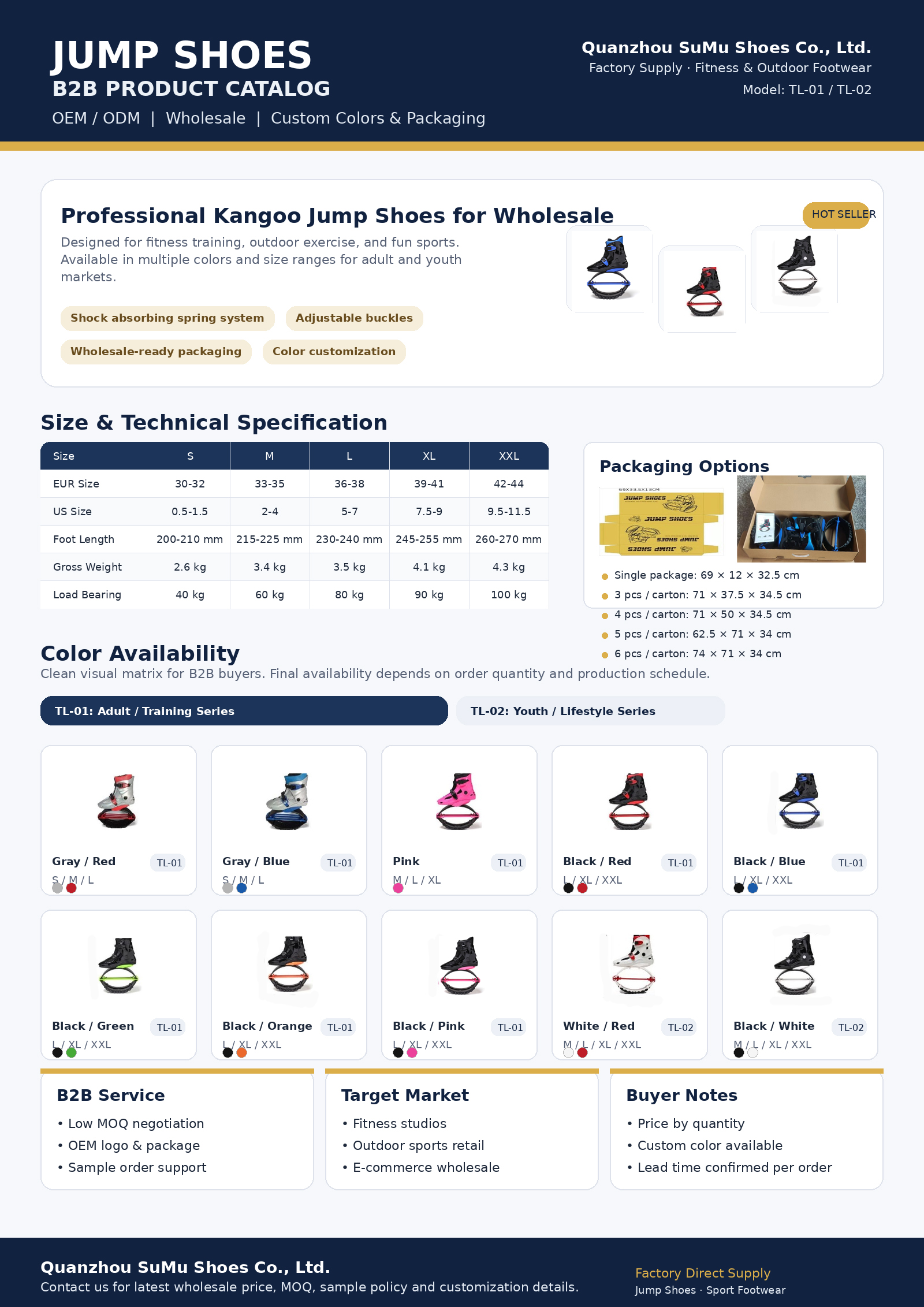
A private label request should be more precise than “add our logo.” Buyers need to identify the base product, intended market, model and size mix, brand files, visible customization, packaging, included materials, approval stages, and the records that will control repeat orders.

Define the project
Separate private label work from general wholesale ordering.
A standard wholesale order selects from confirmed products and packing options. A private label project introduces brand assets, approval files, version control, and additional decisions that may affect sampling, quantity, cost, and schedule. The exact possibilities depend on the chosen model and supplier capability.
Begin with the wholesale jump shoes buying guide if the product and buyer type are still unclear. Use the supplier evaluation checklist to assess communication, documentation, sample handling, and order controls before relying on customization promises.
Private label
An existing product is sold with agreed buyer branding or packaging elements.
OEM request
The buyer asks the factory to confirm specific product, color, component, branding, or packing changes.
New development
A request changes enough product details that feasibility, tooling, testing, ownership, cost, and schedule need a separate review.
Buyer brief
Build one private label jump shoes requirements table.
Use the table as a discussion document. A supplier response should distinguish confirmed options from assumptions and open questions.
| Brief section | Buyer information | Supplier confirmation |
|---|---|---|
| Market and use | Destination market, buyer type, intended sales channel, user group, and expected use environment. | Product suitability questions, available instructions, and any market-specific documents to discuss. |
| Base product | Model reference, photos, required components, and any approved sample. | Exact available configuration and items that cannot be changed. |
| Size and quantity | Size mix, color mix, order estimate, sample quantity, and reorder pattern. | Applicable minimums, size availability, and mix rules for the requested configuration. |
| Brand application | Logo files, color references, preferred locations, dimensions, and required disclaimers. | Available methods, artwork format, placement limits, appearance, and sample requirement. |
| Packaging | Box, label, insert, barcode, carton mark, language, and destination needs. | Available materials, print method, file template, packing arrangement, and approval step. |
| Quality and release | Reference sample, inspection points, evidence, defect handling, and approval authority. | Production records, inspection access, correction process, and shipment-release documents. |
Product first
Choose the model, sizes, and visible configuration before branding.
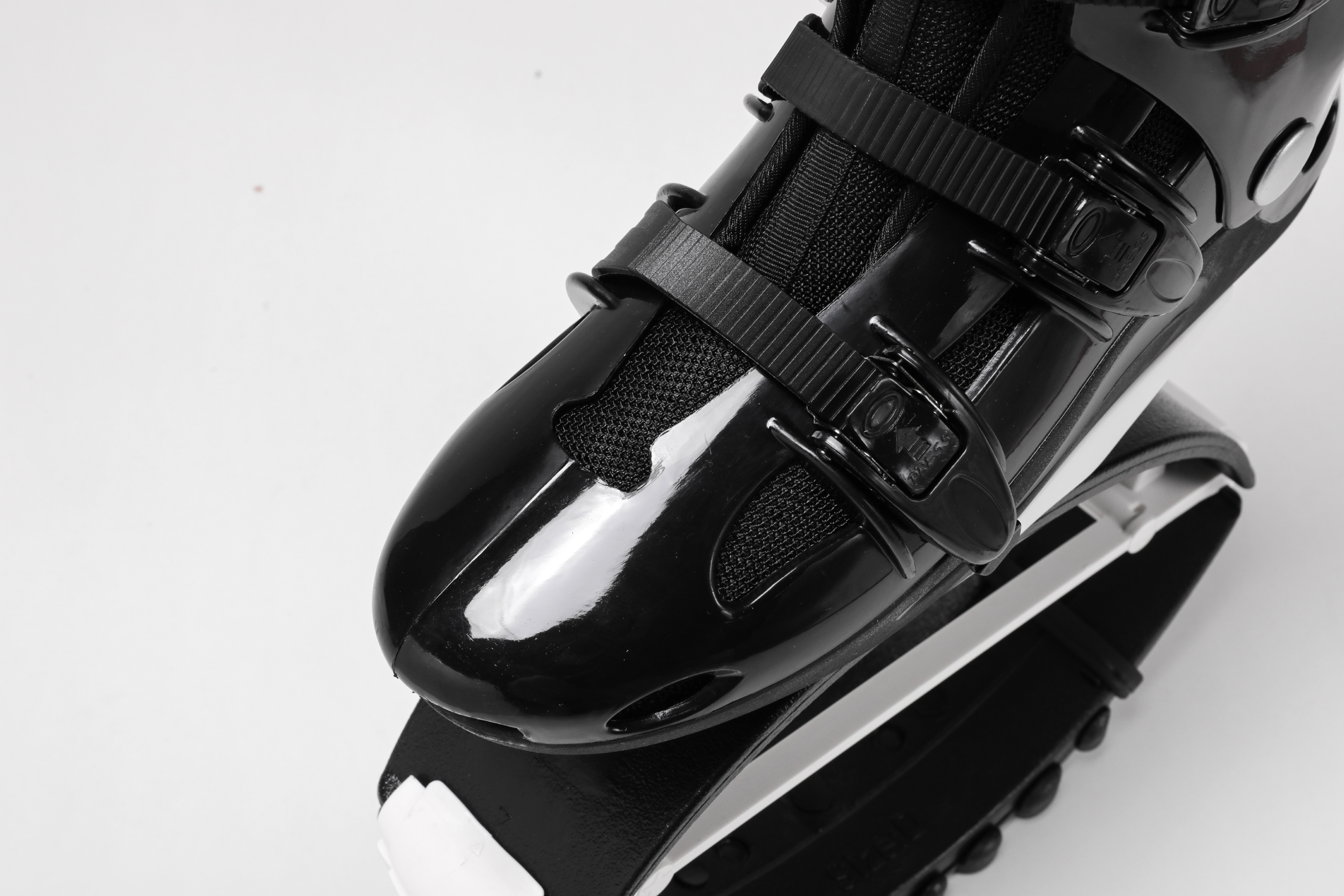
Logo placement cannot compensate for an unclear product choice. Compare whole-product shape, liner, shell, fastening, rebound frame, floor-contact components, color references, and model-specific guidance. Confirm which sizes belong to which configuration and whether the planned mix fits the target audience.
Use the jump shoes size and load guide to organize supplier-provided information without transferring one model's guidance to another. A size plan should be approved as part of the product brief, not inferred from a logo mockup.
Artwork control
Send production-ready brand files with ownership confirmed.
The buyer should have the right to use every supplied name, logo, mark, image, barcode, and statement. Do not ask a supplier to reproduce a third-party brand or make unsupported product claims.
Master artwork
Provide editable vector files where requested, plus a readable reference PDF or image showing the intended result.
Color reference
Identify the color system or approved visual reference and explain whether an exact match or an available stock color is acceptable.
Placement sheet
Name the product or packaging surface, preferred dimensions, orientation, clear space, and any alternative location.
Version name
Give every artwork and mockup a date or revision code so outdated files do not return during production or reorders.
Sample workflow
Approve the physical product and customization as separate layers.
A stock sample can answer product questions before branded work begins. A customized sample or approved production reference can then document visible branding and packaging decisions. Write down what each sample approves: product construction, color direction, logo appearance, label content, carton arrangement, or another defined item.
The jump shoes sample order checklist covers model identification, fit questions, components, included materials, and evidence. Photograph the approved reference from consistent angles and retain the dated decision file.

Approval sequence
Use signed-off gates before bulk production and shipment.
The project owner should know which decision is open, who can approve it, and which document becomes the next controlling reference.
| Gate | Decision | Record |
|---|---|---|
| 1. Feasibility | Which requested product, brand, and packing items are available, conditional, or unavailable? | Supplier response against the buyer brief. |
| 2. Commercial review | Are quantity, quoted scope, sample charges, production questions, and delivery terms understood? | Quotation with exclusions and assumptions. |
| 3. Artwork | Are logo, text, colors, dimensions, placement, labels, and packaging files correct? | Dated mockup or proof with revision code. |
| 4. Sample | Does the physical reference match the defined approval scope? | Sample checklist, photos, findings, and written decision. |
| 5. Bulk release | Does the production order use the approved references and agreed changes? | Final order pack and authorized production approval. |
| 6. Shipment release | Do inspected goods, labels, packaging, quantities, and records meet the agreed requirements? | Inspection, packing, discrepancy, and release records. |
Packaging evidence
Design labels and cartons for receiving as well as selling.
Retail appearance matters, but operational clarity matters too. Decide how the model, color, size, quantity, barcode, buyer reference, carton number, destination mark, and required handling or product information will be shown. Ask which elements belong on the unit, inner package, and shipping carton.
Review the wholesale jump shoes packing photo guide for a practical evidence set covering closed cartons, labels, open cartons, inside arrangement, and shipment staging.

After-sales planning
Confirm branded products and service parts as one commercial system.
Importers should decide whether the launch needs spare buckles, straps, liners, floor-contact parts, hardware, or other model-matched items. Identify compatibility by model, size, color, and clear photos. Do not assume that a visually similar component fits every version.
The jump shoes replacement parts guide helps create a starter list for retail support, distributor stock, or rental maintenance.
Compare like with like
Ask commercial questions against the same confirmed scope.
MOQ, price, sampling cost, production lead time, packing cost, tooling, payment terms, and freight preparation can change with the model and requested customization. Ask each supplier to quote the same brief and identify exclusions rather than comparing headline prices with different contents.
Before accepting a quotation
- The model, color, sizes, quantities, and product configuration are named.
- Each branding and packaging item is included, excluded, or pending.
- Sample type, approval scope, and revision process are written.
- Artwork responsibility and buyer authorization are clear.
- Spare parts and included materials are separately listed.
- Inspection, correction, production, and shipment approval points are identified.
From approval to reorder
Create a master order pack that survives staff and supplier changes.
Keep the final product reference, approved artwork, packaging files, size and color matrix, included-material list, quotation scope, purchase order, approved changes, inspection criteria, packing evidence, and shipment decision together. For the next order, begin with that controlled pack and record only approved revisions.
Use the jump shoes quality inspection checklist to translate the approved private label specification into product, component, label, packing, discrepancy, and release checks.
FAQ
Private label jump shoes questions.
What should a private label jump shoes brief include?
Identify the market, base model, colors, sizes, quantity, branding locations, artwork versions, packaging, labels, included materials, spare parts, destination, and approval records.
Should buyers approve a sample before a private label bulk order?
A physical sample can help confirm the product and visible customization. Define exactly what it approves and keep bulk inspection and shipment release as separate decisions.
Can every jump shoes component be customized?
Options depend on the model, quantity, production method, artwork, packaging, and supplier capability. Request written confirmation for each change.
What information is needed for a private label jump shoes quote?
Send the model or reference photos, color and size mix, target quantity, branding request, packaging needs, destination, sample requirement, timing question, and open product details.